Featured

Regional or City?

Hello everyone,

It has been a long time since my last blog entry and I do appreciate all the comments. I would do my best to answer your questions to the best of my ability.

Ok, so I think I would like to take the time to write about a blog entry about where should you work.

Australia is a pretty big country. It is divided into several areas called the Modified Monash Model (MMM).

MMM 1 to 7 to be exact.

MM1 is the most developed. Think Melbourne, Perth, Brisbane.

MMM2-7 are regional and remote areas. Examples would be Bundaberg (MMM2), Portland (MMM4)

The further you are from the city, the more likely you’d get jobs. However there are pros and cons for living in the city, regional/remote areas.

City (MMM 1)

Pros

  • good public transport – it is easy to get around the city – this includes cycling to work. Melbourne in particular was planned for pedestrians.
  • more variety in food choices – lets face it somedays you want to eat a nice plate of nasi lemak or a warm bowl or ramen during the week. In the city its a stone’s throw away. i.e. Dapur Dahlia in (Brisbane worth visiting) Sarawak Laksa (Melbourne). You may be in Australia but at least for a brief moment your mouth and stomach is at home.
  • entertainment – musical shows, museums, night life, sporting events and other fun events – mostly in the city if you are in to such things. It is a good break from work.
  • more diverse demographic – there are times in the city that I forget that I am in Australia. In Melbourne Chinatown, one can be forgiven if one thinks they are back in Jalan Alor or a pasar malam.
  • more choices for good schools if you have kids
  • closer to the Malaysian embassy if you need to get your passport renewed
  • most courses would be held in large cities. Zoom is great but nothing beats face to face lectures in my opinion

Cons

  • expensive to live in
    • rent – to put into perspective rent for a one bedroom one bathroom apartment with no carpark space would cost you AUD 250-350 weekly
    • transportation – if you choose to drive in the city, be prepared to pay a small fortune in tolls and parking. public transport is also an option but you would have to plan your trips in advance. It can also cost a lot depending where you live. For example St Kilda’s to Melbourne CBD costs about AUD 9 for a 2 way trip. Multiply that to the number of days you work. It gets more complicated with shift work.
    • entertainment – you would be tempted to go to the latest happenings in the city and who would blame you? we did decide to move for a better life after all.

needless to say your earnings can dwindle down pretty fast

  • noise pollution – the constant sound is what I found I could not stand in the city. Every few minutes a tram would drive by and I could feel the vibrations in my room. Sleep is an important commodity, in equal worth to time and money.

Regional areas

Pros

Rent – I could afford to rent a house with 3 bedrooms, a garden, a garage in a decent neighborhood away from the main street for AUD 350 a week

Transportation and commute – my clinic is 5 minutes drive from my house. I can even choose to cycle there if I wanted to.

Parking – there is free street parking in most areas. It is safe to leave your car there to go to work.

Nature walks – some areas of regional Australia is truly beautiful. During the warmer months, I would take my cat out for a walk through the park. It is a good stress reliver for me.

The quiet – depending on what you prefer. I sleep rather soundly at night without the sound of traffic.

More job opportunities – not many people want to live in regional/remote Australia. This would mean more openings for doctors. In GPs for example they get paid more to remain in rural. A good way to pad up your savings.

Savings – speaking of which, you save a lot of money from transport, entertainment and in turn earn more at your job. You can afford to pay for courses, exams a car within a shorter period of time.

Cons

  • Isolation – you are away from most things. the nearest city can be 3-4 hours drive. Your family and friends are hours away from you. If you like the city life, you can be in a shock when you start living in regional. I’m not saying you can’t be friends outside the demographic you are used to. You can, but it is easier to be friends with someone you have a similar background with.
  • Food – unless you are a good cook, take out food can be rather bland outside the city. they have to cater to the local palate. The local palate may not be used to the exciting favorable food we Malaysians love.
  • Lack of entertainment – there may be some musicals or plays even sporting events but otherwise nothing much to do aside from work. Netflix will be your best friend.
  • Harder to find schools for your kids
  • Personal car – you need a car in regional Australia. Some postings (my rural posting) requires you to drive to different sites. I had to work in 4 different hospitals/clinic in rural Queensland. The furthest was 2 hours away from my rented property.

Living in a fish bowl – being one of the few GPs in the town, privacy would be an issue. when I was in a MMM4 area, I could bump into my patients at Woolworth and they would ask me about their CST results. Heck, my postman (who happened to be my patient) while delivering my parcel asked me about his bloodwork and I was dressed in my pajamas. For a long time I did not feel comfortable leaving my house. It really affected my mental health. Anecdotally, there are patients that stalk their GPs. I’m pretty sure that is the exception rather than the norm but something to digest.

The choice of staying in cities or regional towns would depend on other factors like the 10 year moratorium.

You may be single, married without kids or married with kids. Your decision will be influenced by your social and personal situation. In the end the choice is yours. I do hope this short entry would point you in the right decision on your work place. Remember, do not be afraid to move if you feel that the place you are working at is not for you. You may need some time to discover what works for you. So be kind to others and be kind to yourself.

Till next time, stay safe.

Featured

The First Steps

First you need to go to the AHPRA website (Australian Health Practitioner Regulation Agency).

https://www.ahpra.gov.au/

They have an excellent flow chart that you can use for a self-assessment to see if you are eligible to practice medicine in Australia.

AHPRA is like their MMC. You need a license to practice.

There are 3 sorts of registrations.

  1. Limited registration – only practice in the designated area with supervision. i.e Hospital A or Clinic B only
  2. Provisional registration – practice with supervision (interns from Australian medical universities would be given this or those who have completed AMC part 1 and 2 but yet to finish their compulsory postings)
  3. General registration – you can practice anywhere in Australia

You must either have a basic medical degree that is recognised by AHPRA or complete the AMC examinations. 

Thus far, only Monash Medical University is the only medical school in Malaysia that is recognised in Australia. If you are a Monash graduate, you need to show proof that you have indeed finished your housemanship in Malaysia. You can ask your admin in hospital to provide you a written letter stating that you’ve successfully finished your housemanship. You can apply for a provisional registration, look for a job and complete the compulsory postings (more on that later).

For the rest, you have to sit for the AMC exams.

The next thing you have to do if you do not have a Monash Medical degree, is to visit the Australian Medical Council (AMC) website.

https://www.amc.org.au/

Before you can apply for the exams, they would need to verify that your credentials are legit.

Your medical school needs to be recognised by the WHO (don’t worry almost all Malaysian medical schools are)

To verify your credentials, you have to apply for this account

  1. Educational Commission for Foreign Medical Graduates (ECFMG) Electronic Portfolio of International Credentials (EPIC)

In a nutshell, these guys will make sure that you are really you. It is accepted as a verification tool in most developed countries. Even if you want to go to USA you would need this. You need to prepare your documents because they will ask for it. For more details refer to their website. I have listed their current fees below

To create and account and confirm your identity USD 125

Verification of your credentials USD 90

You’ve got your EPIC account? Good, now the next step is to apply for your AMC exams.

To do so you need to apply for an AMC portfolio in order to sit for the exams. This portfolio would keep track on your personal details, professional qualifications, exams you are taking or have taken. Don’t worry. No one but you can see this.  It is a fairly straightforward process and should not give you too much trouble.

Now in the next entry I will tell you more about the AMC exams.

Summary

  1. AHPRA – check if your medical degree is recognised or not
  2. AMC – read the overview of assessment pathways
  3. EPIC – apply to get your credentials verified
  4. AMC portfolio
  5. Start preparing for AMC exams

A Year of Locums

Image above: Red Kangaroo. Tamworth Marsupial Park

Hello everyone,

I hope you all had a good break during the holiday season.

It has been a while since I have posted anything on my blog. The last 12 months were a flurry of activity that has thankfully slowed down.

I spent the bulk of 2024 doing locums around various locations in Australia. It is truly an eye opening experience for myself that I thought I would share with you.

At the end of last year, I decided that I needed a break from GP work. My wife and I were living apart for the better of 3 years due to work and we were focusing on being together again. In all honesty, I felt run down by not just my work but from the drama with my PR application, my wife’s AMC part 2 exam (which she passed), social isolation of being alone in regional Australia and the hoops I had to jump just to be eligibile to sit for my GP exam. Don’t get me wrong, my ex-bosses were wonderful people who were supportive of my decision and I think the world of them, but mentally and emotionally I was spent. My wife and I needed a break from the grind and decided to take up locum shifts. We both had general registration with AHPRA and full working rights in Australia. This was one of the main reasons why I wanted to complete the AMC standard pathway as it would allow me to do locum work outside of GP work.

So, in Australia, there are locum agencies that help advertise locum slots for doctors for various disciplines and career levels (i.e. from RMOs, Registrars, PHOs, Senior medical officer, Specialists etc). You have to sign up to these agencies and they will run a gauntlet of credentialing paperwork to get you started. The main purpose is for the agents to get to know your scope of practice and experience in order to suggest positions best suited for you. You apply for the job advertised and the Health Workforce of the hospital would then decide if they want to hire you or not. The pay is higher than a person working full time and they do cover travel and accomodation.

For my wife, who did 12 months of Emergency Medicine, she had no problem finding locum slots. She also managed to do a few ICU jobs as she had years of experience back in Malaysia.

In contrast, I had difficulty securing a slot due to my lack of hospital recency. From 2020 till 2024 I was working as a GP. Thankfully, a cancellation occured and I was offered the last minute vacancy in a rural part of Victoria. The position was a general medicine RMO for 3 days and to reach the hospital I had to cross the Great Alpine Drive which I can say with all honesty was nerve wrecking and I would not do it again. This however, opened doors for me to apply for Emergency Medicine slots. There are plenty of overlaps between GP and Emergency Medicine, and I had a decent amount of experience in the former under my belt for the hospitals to confidently hire me. I took up roles as a GP registrar and SRMO in various regional hospitals.

Despite having more roles in ED, it was not enough to get by. I am grateful for a Malaysian friend of mine who introduced a company that offers skin cancer screening sessions for corporate companies. This suited me as I have practical experience in managing skin cancer in my GP practice in addition to having Professional Diploma in Dermoscopy and Skin Cancer Medicine. The job was straighforward, I used my dermatoscope to examine skin lesions that appeared suspicious and write my recommendations i.e. advice for biopsy, mole mapping etc.

The locum jobs took me to see different parts of Australia. I saw the sea side with its surrounding green lush, warm and humid environment in Northern Queensland, I explored the dry, arid desert landscape of Western Victoria and South Australia, the metropolitan regions of Sydney and Melbourne. The best part was that the jobs took between 3-7 days (excluding travel time) and I was back home with my wife to enjoy the time off. I could have done more locum slots, but I had enough to get by and set aside some money for savings. I work an average of 10-15 days a month and was earning almost as much as I would have when I worked full time, minus taxes. I applied for online and face to face courses to help boost my CV for hospitals to hire me. The courses were really helpful in improving my knowledge and confidence to work in ED.

Now, its not all sunshine and rainbows. There are downsides of locuming. You are dependent on the availability of the slots. Some spots get snatched up as soon as they are advertised. The remaining shifts are in areas where no one really wants to go. The travelling can also get to you, honestly, I have been in so many flights that the thought of going on a plane makes me airsick already. You will be living out of a suitcase in hotel rooms that depending on your luck can be a hit or miss. Imagine trying to sleep in a drafty hotel without proper heating in the middle of a bitter South Australia winter, getting up early to go to your work place and after that driving to the next location 3 hours away. Your diet would also go out of whack, having to rely on Uber Eats and take outs*. Another downside is you, as an independent contractor, would not get the benefits of an employee. That is no superannuation, no sick leave, no formal learning. You are just there to do the job and go back home. If the hospital likes you, they will invite you back for more sessions.

*On a side note, when I travel, I bring along a rice cooker, chopping board, cooking knife with the basic seasoning (soy sauce, sesame oil, oyster sauce, salt, white pepper) and just cook vegetarian dishes in my hotel room. The purpose of this is to eat healthy and save on cash.*

Finally, another disadvantage of locuming is that your career would not go anywhere. Not many hospitals are interested in providing learning for locum staff. You may get informal teaching from the specialist but most of the time you are by yourself. Unless you have the skills to be a senior registrar, senior medical officer or specialist, your pay and position would remain the same without any further training.

In summary, locuming is great as a stop gap measure to earn money. You don’t need to be a specialist to be able to earn enough to have a comfortable living, however you would also want to consider where you are in your career too. The purpose why I chose to do locum may not be the same as yours. I chose it because I was burnt out and wanted a change in my work and I am grateful I got to experience it this year. Nevertheless, I feel that I am ready to go back into my GP training and skin cancer studies.

Visa and Migration

Hello again,

I thought I take this time to post about my experience with the migration process

I recently received my 190 visa.

The journey was longer than most, but I got there eventually.

I first came to Australia with a 482 short stream temporary skills shortage visa. This was after I got my AMC part 1 and a job as a RMO in Queensland.

After I got my general registration in 2019, I applied for the state sponsored visa. However there were some unforeseen issues led me to move to Victoria.

I transitioned into the 482 medium stream visa to work as a GP. I tried again for the state sponsored visa (190). One of the benefits of picking the 190 visa is the extra 5 points.

So to those who are not familiar with the PR points system, is that the Australian government want migrants who can contribute to their economy. So there are certain parameters that give a migrant points. The minimum required points is 65 in order to be invited to express your EOI.

They assess a migrant based on their age, education level, English proficiency, work history, professional years in Australia, your partners skill and English proficiency and if you applied via State sponsored visa. This is a brief overview, for a more detailed read, please click on this link:

https://immi.homeaffairs.gov.au/visas/getting-a-visa/visa-listing/skilled-nominated-190/points-table

From experience, I would strongly suggest using a migration agent. The immigration process in Australia is complex and it is best to have people who are experienced to navigate you through this.

I learned the hard way. I applied for the visa 190 in 2020, I tried to get the maximum points that I could, i.e. getting the top English scores, using my overseas work experience as well. I scored 90 points. However because I used my overseas work experience to get those points, I was required to show proof that I did work for the Malaysian Ministry of Health. I provided them with my completion of internship letter, a letter from my HOD stating which postings I have done, my EPF statements. However it was not enough, they wanted payslips from 2010 till 2018. I could not produce them and the bank would not print out the statements unless I present myself in person. It was in the middle of the pandemic and flying back was almost impossible. So my application got rejected.

I decided to use a migration agent to help with my appeal. They advised me that the appeal would be sent to the Administrative Appeal Tribunal (AAT). I waited for 3 years to only get a reply saying that the AAT just reviewed by appeal and found that I provided adequate proof that my points claimed were valid and sent it back to Home Affairs to get it processed. Needless to say it caused me much anguish and affected my mental health badly. Here I was, a GP working in regional Australia with shortage of doctors during one of the worst pandemics in a hundred years and my application for PR was rejected just because I could not produce my payslip from 2010. My local MP said she would help but why should she? I could not vote for her and who was I to her? Needless to say I felt jaded from the whole affair that I wanted to just leave this country and try NZ.

It was ThinkVisa (who I would recommend to anyone who is looking for a great migration agent) that suggested I reapply for the 190 as I was eligible. I was skeptical about it as I spent thousands of dollars on the first appeal and the AAT, but I was at my wits end at the point.

I paid their fees and for the new application of the 190 visa that ended up being AUD 5000 (agents fees) + Main applicant fee AUD 4640 + Partner Applicant AUD 2320 = AUD 11960. But the money was put into good use. The agents were great in helping me prepare my documents, they combed through every detail that needed to be given to Home Affairs, they helped me clarify my questions. My wife and I had to sit for our English exams and get a health check again. In less than 3 months I got my visa approved.

So the moral of the story is, please get a migration agent to assist you with your PR. You can do it yourself but one wrong move and you get set back for years. I hope you learn from my very expensive lesson and that your own PR application goes smoothly.

Till next time.

AMC Part 2 and Bridging Courses: A review

Selamat Hari Malaysia to all Malaysians.

It has been ages since I last posted on this blog.

There has been a lot going on in the past few years in between the COVID-19 pandemic lockdowns, the vaccination drive and the return to pre COVID-19 way of life.

I do hope everyone is keeping safe and in good health.

So today I would like to post about AMC part 2.

There have been a few changes to the AMC Clinical exams since I passed it in 2019.

  1. There is no longer any re-test offered if a candidate gets a borderline score. In fact my batch was one of the final cohort to be able to sit for the retest. The retest has 8 stations and the candidate has to pass 6 of them.
  2. The passing mark is 10/14. There are 16 stations altogether with 2 stations being “pilot” stations that are not scored
  3. AMC has not made it compulsory to pass certain disciplines i.e. paediatrics or obstetrics in order to have an overall pass

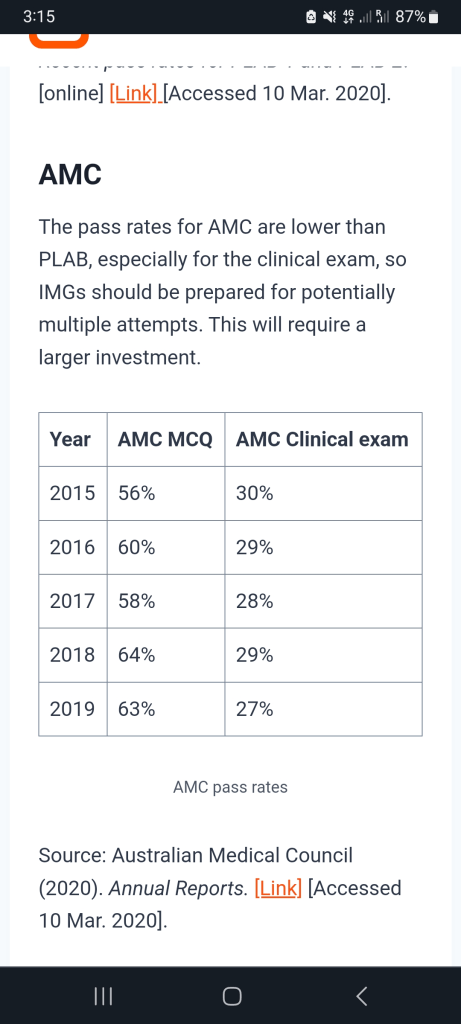
One thing I have noticed is that the passing rate for AMC part 2 has declined over the years.

The passing rate for AMC part 2 as quoted by Advanced Med is more or less 30%. It is one of the hardest exams to pass by far.

credit to AdvancedMed for this table

My wife recently sat for her exams 3 weeks ago and fortunately she was part of the 30% who did pass her exams.

She did both the HEAL course in 2021 and then the Alan Roberts crash course in 2023.

She has given me her permission to share her experiences. She took a break from clinical work for about 3 years. She decided to go back into medicine in 2021. She prepared and for her AMC exams after not seeing patients for almost 3 years. She decided to go for the 12 week HEAL course as she felt she needed more guidance seeing her prolonged absence. She sat for her exams in 2021 while working as a RMO working in ACT. Though she got better marks than when she first set for it back in 2018 she missed by one station. She took some time off studying and concentrated on her work for a few months before attempting again. This time around, we practiced together with past year questions and AMC clinical handbook scenarios whenever we had spare time. She enrolled in the Alan Roberts crash course that also included a mock exam. She sat for it a few weeks ago and she passed it convincingly.

Her comments on the HEAL course is that it is suitable for candidates who are rusty in their clinical knowledge. It is a good course that covers all the subjects that needs to be covered. HEAL is excellent in introducing the IMG to the Australian health care system that can be daunting and unfamiliar to those who have practiced their entire career in their home country. However, she feels that the course content is too focused on knowledge and not so much on how to approach the patient during the exam. The AMC exam is not just knowledge based, it is more of a game. There is a template to approach each patient and boxes the examiner ticks when each task is fulfilled. Knowing how to build the rapport with the patient is also taken into account. Having excellent clinical knowledge is always important however, in the exam setting, what the examiner really wants to hear are the key points in order to give you the passing mark. During her 3rd attempt, she already was working for 18 months, and is an Emergency Department registrar in one of the hospitals in Melbourne, she has seen a wide array of clinical cases and most importantly, learned how to talk to the patients. She decided that , in addition to our almost daily role-playing practices of clinical scenarios, she would go for the Alan Roberts one week crash course. She was given chances to participate in the role play and get to see the facilitators in action. The facilitators advised the candidates how they would approach the case during the exams by doing the stations themselves. She already had solid clinical knowledge, she needed to know the strategies on scoring as many points as possible for her to get the passing mark. Thankfully she did and I am proud of her accomplishment.

Now in summary, which course is suitable for you? Is HEAL or Alan Roberts better? It really depends on where you are in your career. My wife’s experience may not be the same as others. We all come from different walks of life even if we are in the same profession. Both courses have helped my wife in her final goal. I hope her insight would help guide you towards you passing the exam.

Till next time

Pathways to become a GP in Australia

It has been a while since I’ve wrote. COVID has really changed the game for everyone.

For some reason or another, most IMGs coming to Australia end up going down the GP pathway.

I do not know why most IMGs chose this pathway. Perhaps its the life-work balance we yearn for that is missing in Malaysia. The earning ability as a GP is undoubtably more in Australia than it is in Malaysia. One can earn a comfortable life as a GP. However the grass is never always greener on the other side.

There are several ways to enter the GP pathway.

The first thing you need to find out is if your degree is recognised by AHPRA. I have written about this in my previous posts.

One can enter the PESCI pathway with AMC part 1 and a limited registration. In my honest opinion this will limit the places you can work in. Please read more about this pathway if you feel it suits you best.

The safer route that allows you more flexibility would be the standard AMC pathway that gives you a general registration (GR). With a GR you can work as a GP or in the hospital if your visa allows it. Honeslty speaking, GP is not for everyone. You may try GP for a few months and find that it does not suit you and you can go back to hospital to find out what you really want to do. Even being a career hospitalist is a choice here in Australia. We can discuss this in a later post.

Ok back to our topic.

There are two colleges you can apply to get Fellowship in general practice.

  1. Royal Australian College General Practioners (RACGP)
  2. Australian College of Rural and Remote Medicine (ACCRM)

I will talk about the RACGP

As of 2021-2022 training to become a Fellow is via two pathways

  1. AGPT – Australian General Practice Training Program – a government funded pathway to train doctors to become GPs. The duration is about 3 years. The pay is fixed with superannuation, paid annual leaves etc. There is good supervision and the clinics that the doctor is sent to has been vetted by the college to train GP registrars. The goal is to prepare the candidate to successfully pass the GP exams. The entry criteria is listed on the website. In summary you’d need a general registration and permanent residency.
  2. PEP – Practice Experience Pathway (PEP) (Standard) – Now with the PEP Standard pathway, it gets a bit tricky. The goal of this pathway is to get IMGs to rural and remote areas to meet the workforce shortages. One needs to have a minimum of a limited registration to be able to apply to PEP. The areas which a potential candidate is elligible to are MMM 2-7 regions (please refer to the workforce calculator to determine the MMM status of your area of interest). You can apply for PEP even on a temporary work visa. You would be allowed to charge the full Medicare rebate of a Vocationally Registered (VR) – GP -( note that non VR rates are 80% of VR rates – the difference is significant). You would also need to nominate your clinic to the college to see if it is suitable for you to conduct PEP. Now finding a good clinic can be challenging. There are many clinics out there that will take advantage of the many vulnerabilities an IMG faces – i.e. registration with AHPRA, visa and financial status, isolation of being far away from family – to their benefit. I have experienced it first hand and heard countless anectodes of IMGs being mistreated by sadly, IMG run clinics.

So my advice is this, if GP is what you are aiming for, read all you can about the AGPT and PEP. If you have friends in Australia who are GPs, pick their brains about these two pathways. Do not rush into things and take your time to decide.

If you do go into PEP, please visit the clinic you intend to work in. Sit with the practice owner for a week or more to see how it is run. If you note anything dodgy about the clinic, write it down for your own reference. Talk to your friends who are GPs or registrars in the program to see if the clinic is suitable for you.

Some clinic owners see their clinic as ways to make as much money as possible and would stoop to unethical methods to keep the patients with them i.e. provide face mask wearing exemption letters. They have become more business-persons rather than doctors. You can earn a good living being a GP but it has to be honest work. Please avoid such clinics, and most importantly do not end up being like these doctors.

I can talk about selfcare in future entries. It can be applied to every health care provider in the world. It is high time we as doctors should start taking care of our own health too.

Till next time

Stay safe.

Living in Australia: The First Few Months

Hello again,

I hope you are having a good weekend

I have talked about exams, finding a job and a short introduction of working as a doctor in Australia

This time around I would like to write about the first few months living in Australia

When I first came to Australia, I spent most of my money on the exams and flights

I got a job in regional Queensland

I saved up as much as I could.

My credit card was almost maxed out paying for the expenses mentioned above

I was travelling with my wife who also had some savings aside

We pooled our resources together

Accommodation

My employers offered us lodging for a month until we found a new place

We took full advantage of it

We stayed there shorter than we anticipated because we found a good deal on a semi-furnished house. By then we were already earning salaries so we could afford to move out.

In the first few years in Australia, you will be moving around a lot. So, it does not make sense for you to buy a house unless you are 100% sure you want to commit to the place.

Rent is paid weekly

The cost of rent depends on where you are. In ulu places, its cheaper compared to the city.

One good site I would recommend is this

https://www.realestate.com.au/rent/

Working in regional or rural areas can save you a few thousand dollars a year in rent money

The real estate agency would want a few details. Mainly ID documents like passport, work offer letter and a recommendation*

* this is basically a letter written by your previous tenants. If you’ve been staying with your parents all this while, don’t la ask your parents to write this letter. One way is to ask your hospital admin in Australia to vouch for you by saying you’re responsible in answering your emails, providing documents bla, bla, bla.

Transportation

The first thing I realised in Australia is how big it is. In Kuching, everything is so close to each other.

The first thing that we got was a used car.

Why a car? Well we needed to move luggage around and buy more stuff.

We didn’t know anyone in the place we were posted at.

Carrying all these around by hand and walking several kilometres was not feasible.

Hiring cars would cost even more money.

So, we decided to buy a used car.

We went to this website https://www.gumtree.com.au/cars

  • One piece of advice I will give you: Do not buy cars from personal owners. Always buy cars from a dealership. They will make sure your care is road worthy (need certificate one), not stolen, serviced, road tax (here they call it rego)

Buying cars in Australia is not as expensive as buying a car in Malaysia.

There is a running joke in Malaysia that goes like this “When you buy a car in Malaysia you buy two for the government.” Its most likely to support Proton. Anyway, I’m not going to talk about Malaysia’s cars here

A decent used car can cost between AUD 3500 to AUD 6000

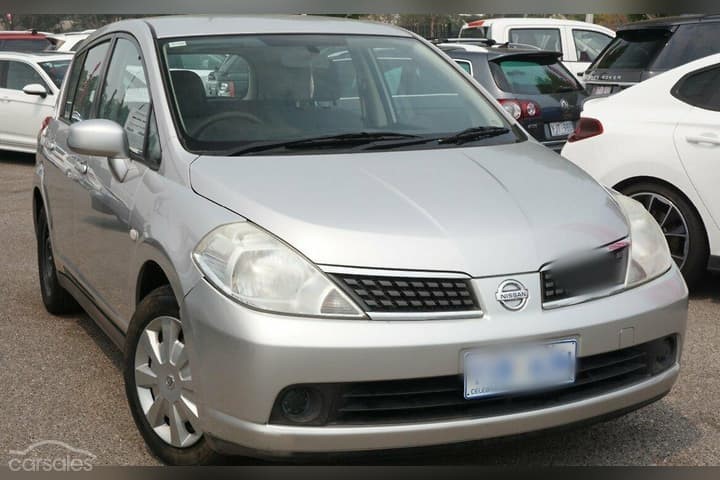
I bought a used Nissan Tiida 2009 model costing less than AUD 5000. It was under the ownership of an old couple who really jaga it nicely.

Image result for nissan tiida

They just need your passport to confirm your identity. I also brought along my international driving license too

If you want to change your car later by all means do so. Once you have a pay check, you can apply for a loan to get a newer car if that’s your thing.

Food

How is food in Australia?

In urban areas where there is more cultural diversity, the food can be delicious (no where near our Malaysian food la but still not too bad). Finding work in urban areas though, not so easy.

In regional or rural areas, not so much in terms of food

You might get a few Korean, Chinese or Indian restaurants around, but they really toned down the spiciness to fit into the local palate.

Oh, by the way, no 24 hour mamak also.

This was a big culture shock for me as a Malaysian. For us, food is everywhere 24/7, 365 days a year. To come to a place where the 24 hour food joints are McD’s (Macca here in Aussie) and Hungry Jacks (Burger King) is depressing.

Eating out is also expensive and lacking variety. There is only so much eggs, bacon and avocado I can take.

The coffee on the other hand is amazing due to the Greek and Italian influence. If you are a coffee aficionado (atas coffee drinker) you will like it here.

The only other option is to masak sendiri which brings us to

Groceries

Raw products in Australia is cheap compared to Malaysia. Don’t take in the conversion factor, you can afford to eat healthy here without blowing a big hole in your wallet.

Almond milk here is AUD 3 (can reach AUD 1 if on discount) compared to home RM 12-15

Even if you’re not into these sorts of food, the other products here are affordable

I moved here with my wife. We don’t have kids yet.

We spend roughly AUD 90 a week for the both of us. This includes food and other stuff i.e. washing detergents, toiletries etc

Most areas have Aldi, Coles and Woolworth.

If you really want to get a good bargain on raw products, you can go to the farmers market.

Cooking at Home

Something I would recommend you doing.

Buying a slow cooker is the best investment you can do.

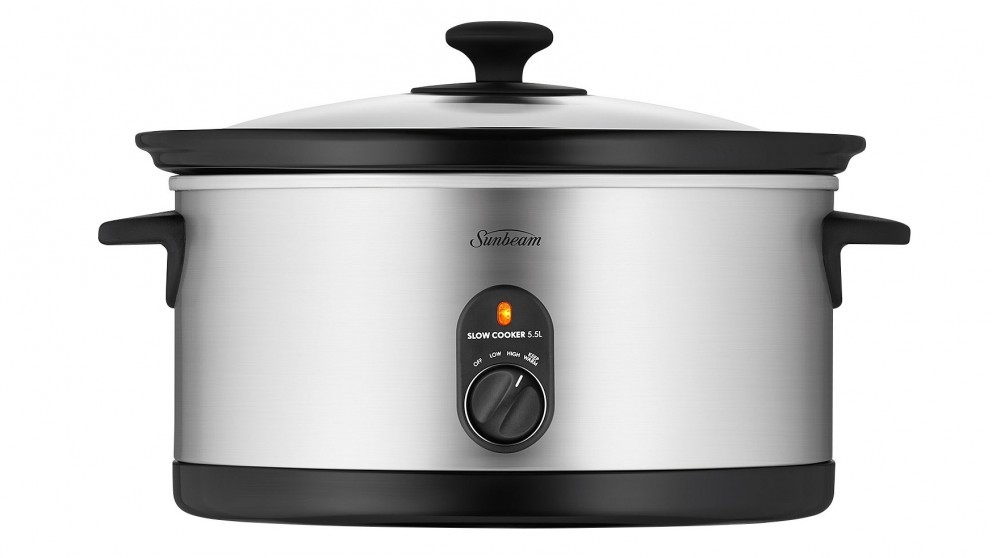
Sunbeam SecretChef 5.5L Slow Cooker

The first hardware I bought in Australia. A 3.5L slow cooker costing AUD 32.

There is so much you can do with this with so little effort.

So many recipes are available. I got mine from:

https://www.countryliving.com/food-drinks/g1903/slow-cooker-recipes/

We cook a few days’ worth, keep it in the fridge and reheat it when we want to makan.

We cooked different dishes, so we won’t get too bored of what we are eating.

Don’t worry, this slow cooker won’t burn your house down. It cooks the food slowly over 6-8 hours time.

Just pre-cut your ingredients the night before, chuck it into your cooker before going to work. By the time you come home, got food liao.

Internet

I will state this here.

Internet in this country isn’t as good as Malaysia.

Maybe the country is big, but I don’t know the exact reason.

Compare internet plans before getting one.

And when you’re renting, make sure your house can support NBN (fast internet connection sort of thing)

Entertainment

Put aside some money to enjoy yourself.

Yes, you need to save money.

But you came here wanting a better life for yourself. No point saving all the money you can and end up miserable.

Its ok to spend a bit of money to relax and have fun.

Don’t la sampai make it rain ok.

I personally like to drive down to the nearest big city and spend the weekend there makan and jalan jalan. My wife likes to watch the orchestra live. A change in scenery occasionally will recharge you, but to each their own.

Exercise

You have time to exercise.

Australians pride themselves on being active.

There are tonnes of gyms out there.

I chose Jetts Gym that offers 24 hour services

https://www.jetts.com.au/

Working out is one of the subjects I can spend the whole day on.

I may write an entry dedicated to weightlifting another time.

Ok I hope this gives you a short glimpse of how its like here in Australia in the first few months.

Till next time!

Enjoy your weekend!

Working in Australia

Hello again!

Some of you might want to know how working in Australia is like compared to Malaysia

The first thing I can say that everyone’s experience in different

I came from Malaysia with a background of ENT, general surgery and plastic surgery

When I came to Australia I was given a Senior House Officer (SHO) position for 52 weeks with an option to renew it

By then I did not want to enter a surgical based programme because I lost all taste for it

I wanted to have a work life balance and not be on call

I liked the breadth of knowledge rather than focusing on one discipline

I decided I wanted to go into GP

I prepared myself by requesting more exposure to O&G, paeds and ED.

I will talk about GP training in this country in another entry

This entry would be about my experiences as a RMO here in Australia

Working Hours

In Australia you are supposed to work a certain amount of hours in a week. You can work anywhere between 36-40 hours per week. You are paid per hour. The base pay depends on which state you are working at.

If you are rostered for more shifts, you will be paid according to your contract (it can be 1.5 to 2.0 times your base pay).

You get your payslip every 2 weeks (unlike in Malaysia where you’re paid monthly)

The finance guys will minus off taxes, Superannuation (like EPF la)

You can apply to a salary packaging scheme i.e. Remserv that protects your salary from being taxed. It can be used for rent/petrol/utilities etc – read up more about this

Making Clinical Decisions

As a RMO you are a junior member of the staff

Everything you do or get asked on by the allied health staff – RUN IT BY YOUR SENIORS

This is important especially in the first few months working in Australia

This is not Malaysia, things that are acceptable in Malaysia may not be ok here in Australia

Patient’s here are more aware of their medication and health conditions compared to back home

Do not brush of patient’s complaints or there will be a formal complaint against you

Always play it safe even if you know what you are doing.

Run your plan by your registrar or consultant before initiating it. You can also learn from their explanation

The good thing about Australia is that almost everything is electronic, this includes clinical guidelines

Each state or hospital service is different, but these guidelines are a useful resource for you to decide what treatment your patient needs.

There are ample computers available in every ward

Always follow the guidelines, do not deviate from them unless you have the backing of someone more experienced

This is not place to have “I rasa patient ini ada …”  or “Masa I dekat HKL …. “ and back it up with an anecdote or something a prof said to his/her master students and you picked it up while doing rounds in Malaysia.

 If you cannot back up clinical decisions with cold hard facts from the accepted guidelines, this can be trouble.

Career Longevity

Remember to pace your self

It’s hard enough to migrate from home to come to a foreign country and work

Do not burn yourself out

You came here to make a better life for yourself

Be kind to yourself

If you want to reward yourself with a nice trip to the city for “jalan-jalan, cari makan” by all means do it

If you want a video game console to help you destress – do it

If you feel stressed out with work please seek medical help. They take mental health very seriously over here. Being away from your support system at home is challenging. Sometimes talking it out with your spouse or close friends will help

Take little breaks in between

Always go and eat your meals. If the patient is not dying – please go and get something to eat

After your shift, handover your patients and go home

Once you go home please switch off work. It will give your mind a break from being at work. Disconnect your work email. Silent your work phone and chill.

Do not be afraid to look for better job opportunities. After you get your general registration and PR the world is your oyster.

If your current workplace is not aligned to your personal and/or professional goals, find one that is.

You can always switch between private and public hospitals. It’s not like Malaysia where if you quit government you cannot come back in

Professionalism

Australians treat their employees rather well in comparison to Malaysia

They don’t have punch ins or thumb ins machine.

They don’t expect you to fill up dumb paperwork to fulfil some Datuk’s KPI or such.

However, you are expected to work hard while you are on the clock

Be punctual, do all your tasks within your scope and handover properly

Be very careful about your own personal views especially when it comes to race, religion and sexual identities. Aussies are not the most politically correct (PC) people in the world but they are doing a good job in making their country inclusive of all walks of life. Do not under any circumstances exhibit racial or religious bigotry or being homophobic, transphobic in public or private or even give parenting advice for that matter.

Keep your personal thoughts to yourself. Keep your head down and grind on with your work. You are there to work, not change the world.

Do not goof off or go for long coffee breaks like back home in Malaysia

You will be assessed after every term (10 weeks) by your supervisor. Those assessments are very important as it goes back to AHPRA.

That’s all I have to say for now

The next entry will be about life outside medicine in Australia

Till then, stay positive!

General Registration

Hi there,

I’m back to writing after being on-call for one week.

Now I have written previously about the different types of medical registration in Australia

To practice medicine you need to be registered.

In terms of the limited registration, I am only going to talk about registration for area of need i.e. areas lacking doctors

Type of RegistrationWho is it forWhere can you work
LimitedIMGs who do not qualify for general/specialist registrationGiven to IMGs  who passed AMC part 1 + completed internship/housemanship + secured a job in Australia  

Can only work at the designated area of need  
Provisionalmedical graduates who got their degree from NZ, Aus, UK or any other med school recognised by AHPRAIf you graduated from UK or hold a Monash Medical degree you can apply for this + secured a job  

Would have a designated place for supervised training  
GeneralIMGs who passed AMC part 1+2 and completed 47 weeks of supervised training*Can work anywhere in Australia depending on your visa status

Now what is supervised training?

It is their version of housemanship.

You need to be offered a job first. So look at my previous job on how to find a job here

https://doctorhornbill.org/2020/01/02/finding-a-job/

How long is it for?

It is for 47 week duration after taking away your 5 week leave.

You get hired on a contract basis for 52 weeks

You are allowed 5 weeks of recreational leave in those 52 weeks

Depending on how fast you want to complete your supervised training, you can choose to forgo your leave to the very end.

What are the compulsory rotations?

You need to have

Medicine8 weeks
Surgery/Orthopaedics8 weeks
Emergency Department10 weeks

The rest can be made up of what you fancy.

If you are going the GP route, you’d want to have exposure in Paeds, Obs/Gyn and even more ED postings are excellent

It really depends on what you want to specialise in really

Once you have the AMC certificate + completed the compulsory rotations, get your admin staff to provide the necessary paperwork and it will be sent off to AHPRA

Take into consideration that it will take a few months to process it so do it as soon as you can to avoid any delays to your life plans.

Once you’ve gotten a general registration you can work anywhere in Australia.

In my next blog I will write about how life is like as a RMO in Australia.

Have a good week ahead!

Saving Money for the AMC Exams

Our MYR is weak

There are a lot of reasons why it is weak; however this blog is not a political blog or a finance blog.

I will leave the explanation to people with better knowledge on the topic.

What I do want to talk about is this.

The AMC exams are expensive.

Flights and accommodation will cost you money too.

How do you save enough money without going bankrupt?

Now, we are all in different stages in our lives.

Some of you may be in your mid to late 20s, others in their 30s and some even in their 40s.

You may already be married, with or without children.

You may already own property.

You may have parents who are loaded.

You may have parents or siblings to support.

What I’m getting here is this: There is no cookie-cutter way to save money.

I will share with you what works for me to save money.

Some parts may not be suitable for you and some will.

Just take whatever you need from this blog and if you have any other ideas on saving money, share it in the comments below.

Alright, let’s begin.

In my previous entry I’ve listed the fees for the exams etc

To save time I will share it here in this blog – (as of 2/1/2020)

EPIC accountAUD 307
AMC portfolioAUD 500
AMC MCQAUD 2720
AMC ClinicalAUD 3530
TotalAUD  7057

Resources for exam revision

John MurtaghAUD 145
AMC MCQ handbookAUD 275
AMC Clinical HandbookAUD 275
AMC MCQ online question bankAUD 159
TotalAUD 854

Grand Total = AUD 7911

After conversion to MYR = RM 22625.46 (1 AUD = 2.86 MYR) – rate 2/1/2020

I did not include my flight prices as it may have changed since then but based on the prices available today:

Flight RM 3000-4000 (two way) – to Singapore (MCQ exam) and Australia (CE) – depend if you book very early and off season.

Accommodation – MYR 215 – 315 a night (Melbourne – near NTC)

If I included flight, accommodation and food, the cost can easily reach MYR 30000

Oh BTW, you also have to pay for working visa (another confusing subject I will talk to you about in another entry)

Jia lat lor! How to afford so much ?!

That was what went through my mind as well

But I knew I could earn that back within 2-3 months while working in Australia when I earn their currency

First I shall teach you to save

When I decided to migrate to Australia in 2016, I was earning UD48 pay earning MYR 75000 per annum after tax and EPF

I was already married at the time but no children

I had financial commitments too i.e. MYR 2000 plus a month

It was hard to save money as cost of living was rising in Malaysia but it can be done.

I made a list on things I can live without

  1. Drinking in pub
  2. Eating out at fancy restaurant
  3. Buying expensive designer clothes
  4. Going on expensive holidays
  5. Buying a new car
  6. Expensive wedding – honestly this is the best thing I did not spend money on
  7. Buying new handphone/laptop/tv
  8. Using my credit card for non-important purchases
  9. Buying luxury groceries

I should have done this when I started working back in 2010. I could have saved more.

Anyway, no more YOLO for now.

I then made a list of things I can do to save money/make money

  • Cook at home
    • Trust me this saves the most money
    • Invest in a slow cooker – this will save you loads of time
    • Make a lot of food at one go and deep freeze it so you can eat it for the rest of the week
    • There are a lot of slow cooker recipes online for delicious food with affordable groceries
    • This is the single most worthwhile investment you can make. I bought one the moment I came to Australia
  • Locum
    • Most locums in Malaysia pay MYR 40-50 an hour. Just do it
    • Overnight shifts are the best if you work in KK – can study at night too
    • Trust me an extra couple hundred a month is worth it
  • Doing extra calls
    • At MYR 200 a night – meh might not be worth it, but if you are based in the hospital and you can’t get locum jobs this is the next best thing
    • This can bring you extra RM 800-1000 per month depending how busy you are
  • Use account B on EPF
    • We cannot touch account A till we are 55 years old
    • We can however play with account B
    • Use account B to pay your monthly mortage instalments if you own a house
    • You can also use account B to pay for other things – refer to their website
    • optimise where your money will go to
  • Put aside a fixed amount of your income specifically for exam fees/books
    • Every month I put aside at least MYR 2500 – but this depends on you really
  • Pay off credit card as soon as you can
    • Interest rates at 9-15% are no joke
    • As soon as you pay for your exam fees – do your very best to pay off what you owe your bank

This list is of course not a be all and end all. It worked for me. It may or may not work for you. But I do hope I help put some things in perspective.

If you have any more ideas on how to save money to migrate please share in the comment section below!

Till next time!

Stay positive!

Finding A Job

Ok so now you’ve sit for your AMC exams and want to find job in Australia

Passing AMC does not mean you get a job automatically

You will still need to go hunting for one

*Unlike when I got a job from KKM, the interview was just a formality – JPA gave permanent posts back in 2010*

Where do you apply?

Now it depends on whether you just passed your MCQ or both the MCQ and CE.

You can still apply for work with just passing MCQ. But do try to pass your CE ASAP it will make a difference.

I will be writing this based on my experience

I passed the MCQ in late 2017. I failed my first attempt CE in April 2018 but was offered a retest.

I was advised by a senior of mine to try to apply for a job first, learn how the system worked and sit for my exam at a later time.

I passed my retest in 2019 and got my certificate, and applied for general registration.

Continuing on.

A few websites were recommended to me, the one I liked was

https://www.medrecruit.com/international-doctor-jobs

You can also go to each state and see if any vacancies are advertised there

The job titles are different in each state

In Queensland:

Intern – obviously you cannot apply for this

Resident Medical Officer (RMO) – Junior house officer (JHO) or senior house officer (SHO)

Principal House Officer (PHO) – like a registrar but not in training programme.

Registrar – for those in training programmes

Clinical specialist/Consultants/Senior medical officer  – this one not really important in our discussion

For your purpose – if you are going through the Standard Pathway – look for the RMO openings

Preparing your CV

Your CV is important

Don’t anyhow write stuff

There is a format for this

https://www.ahpra.gov.au/Registration/Registration-Process/Standard-Format-for-Curriculum-Vitae.aspx

You need to follow this format otherwise they will not entertain you

Get more information

My experience is unique to me. Yours will be too. Although there will be a lot of similarities, we will encounter things differently.

So ask around if you personally know any colleagues who have migrated from Malaysia after completing housemanship. Dig their brains. They will be happy to help you out.

Know the working hours, environment, type of people you will be treating

Learn where they are short of staff and need people to fill in vacancies

I myself had amazing advice from my friends who migrated here earlier than I have.

This advice is extremely valuable

Most importantly, once you’ve made it, don’t be selfish with knowledge. Help them as you have received help yourself.

Where to apply to

Australia still has shortages in rural and regional areas

Read up on the Monash Modified Model (MMM)

https://www.health.gov.au/health-workforce/health-workforce-classifications/modified-monash-model

it’s a way they identify areas which are urban, regional or rural

i.e. Brisbane would be MMM 1 – urban. Hervey Bay MMM2 – regional, Biggenden MMM 5 – rural

Kesimpulanya – the higher the MMM score the more ulu

Where you pick would depend on your preferences of lifestyle.

I would advise to try the regional and rural areas. Better quality of life. Easier when you apply for PR too. 

Interview

Ok you scored an interview – Hurrah!

Prepare for it now

There are tonnes of websites that help you prepare for the interview

https://www.locumleaders.com/news/career-tips/medical-job-interview-tips-for-physicians-and-clinicians/

I recommend this one above

Seeing that you’re overseas, they will do a phone/skype interview.

Again, I would suggest you take leave for the interview

You need to be in a calmed and collected place

Make sure your laptop and microphone is working if its skype

Or if they call your mobile – charge it!

Be mindful of the time difference. Can be 1 hour can be 3 hours. Always confirm the time!

Practice speaking proper English. It will help during the interview. Speak calmly, take your time answering the questions. Show them your best self but don’t go overboard ok.

Aside from the usual job interview questions, like why do you wanna work here, what are your goals etc, they will ask you a clinical question to see how you’d respond to the situation

And they will ask you a situational judgment test. i.e. if you find your colleague drunk at work what would you do?

So prepare for all of this. Google is always there

Results

They will notify you of the results in a few days and you can decide if you want to take the job. I would advise to apply to many places and see which one responds to you. I applied for almost a dozen before getting a reply

All the best and have a positive mindset!